Web applications, Portsmouth
When off-the-shelf software does not fit, I build what does: bookings, sign-ins, records and the screens your staff use to run them. From Portsmouth, for the South Coast and the UK.

Who it is for
Organisations with a job that off-the-shelf software does not fit: a school, a university department, a charity, a small business.
For example a booking system, a members' area, a marking system or a private archive.
What you get
- A system designed from research with the people who will use it.
- Sign-in that matches how your organisation works, with the right access for each role.
- Bookings, payments and tickets, when you need them.
- The data you already have, moved in safely.
- A record of who did what, when the job needs one.
- Screens built so that people with disabilities can use them, from the first page.
How it works
I talk to the people who will use it and watch how they work. I build an early version, test it with them and change it until it fits.
Then I host it, keep it safe and keep it running.
What it costs to run
The running cost depends on how many people use it and how much it has to store. I size each system to run fast on modest hardware.
I quote each job up front. Tell me what you need and I will tell you what it costs to build and what it costs to run.
Work like this
-
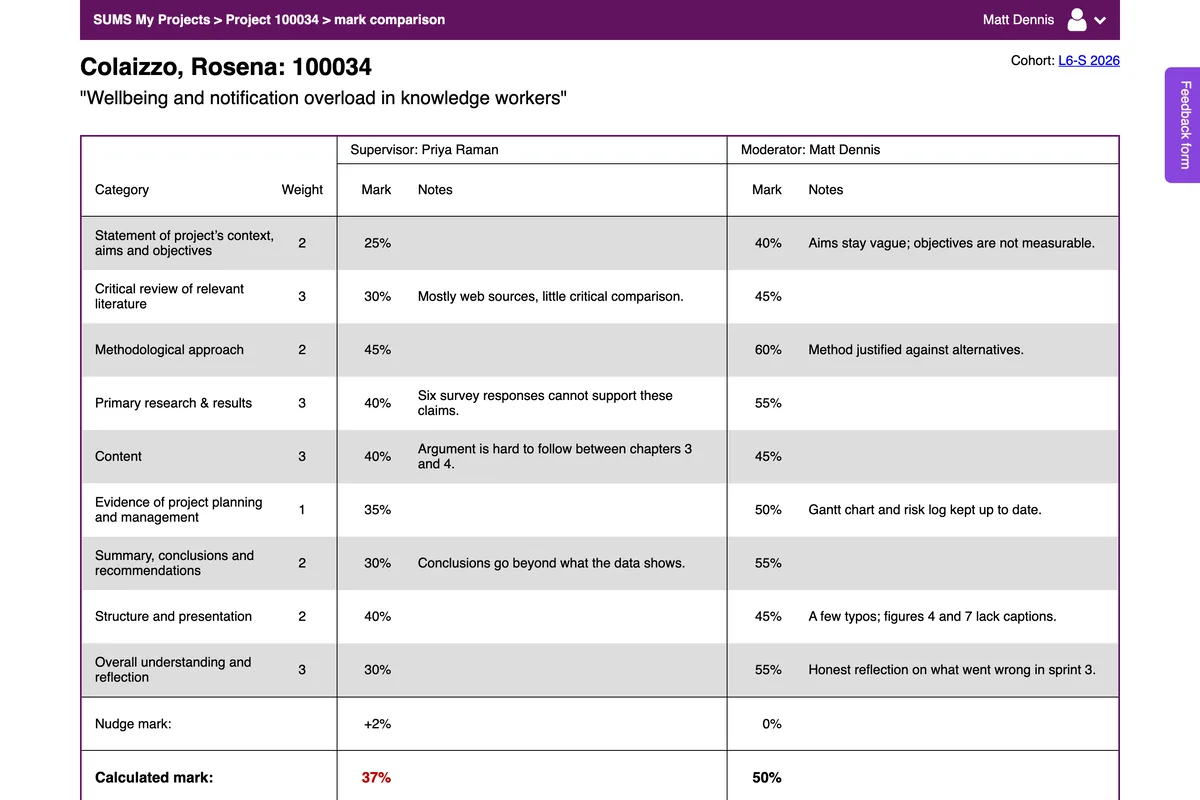
Since 2018 in daily use at a university
Websites and apps
SUMS
Two markers grade each project, and neither sees the other’s mark.
-
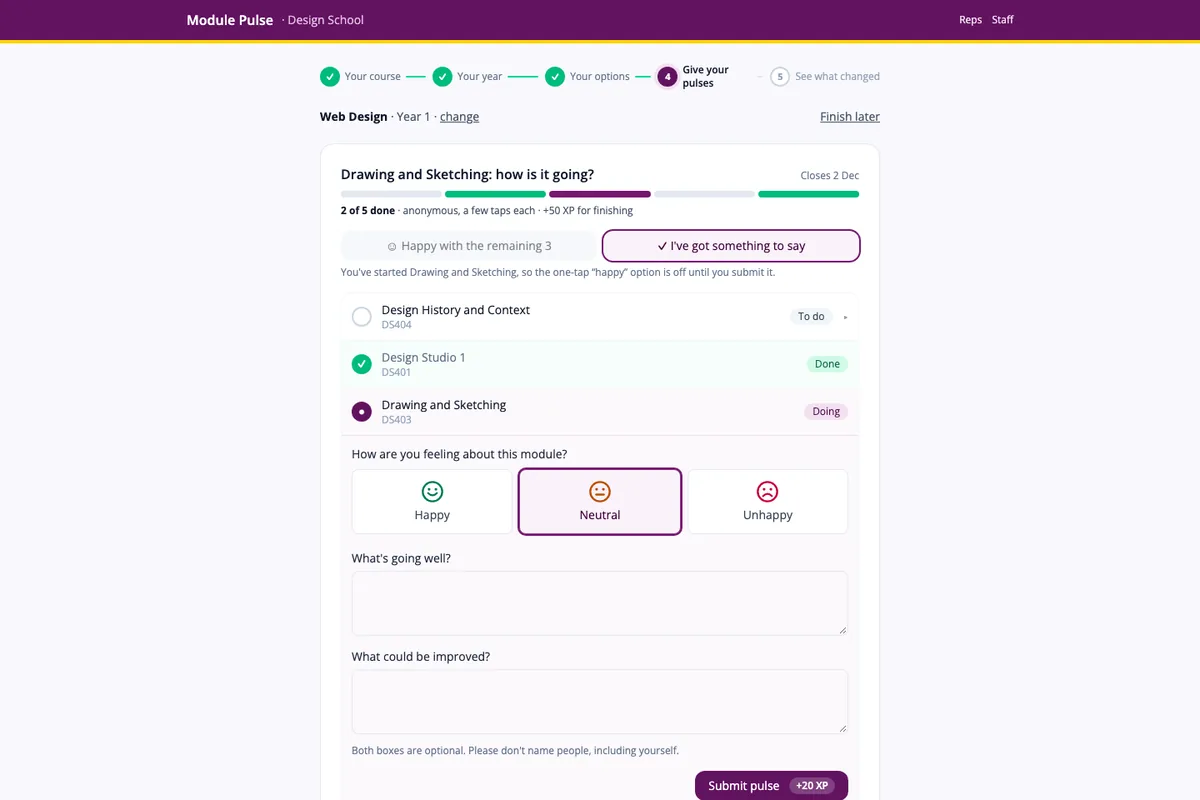
Data and research
Student feedback platform
Annual and short surveys. Nobody can trace an answer back to the student. In testing.
-
About 2,100 photographs in a private archive
Websites and apps
Photo archive for a school
Artists’ photographs kept in one place so students can learn from them.
-
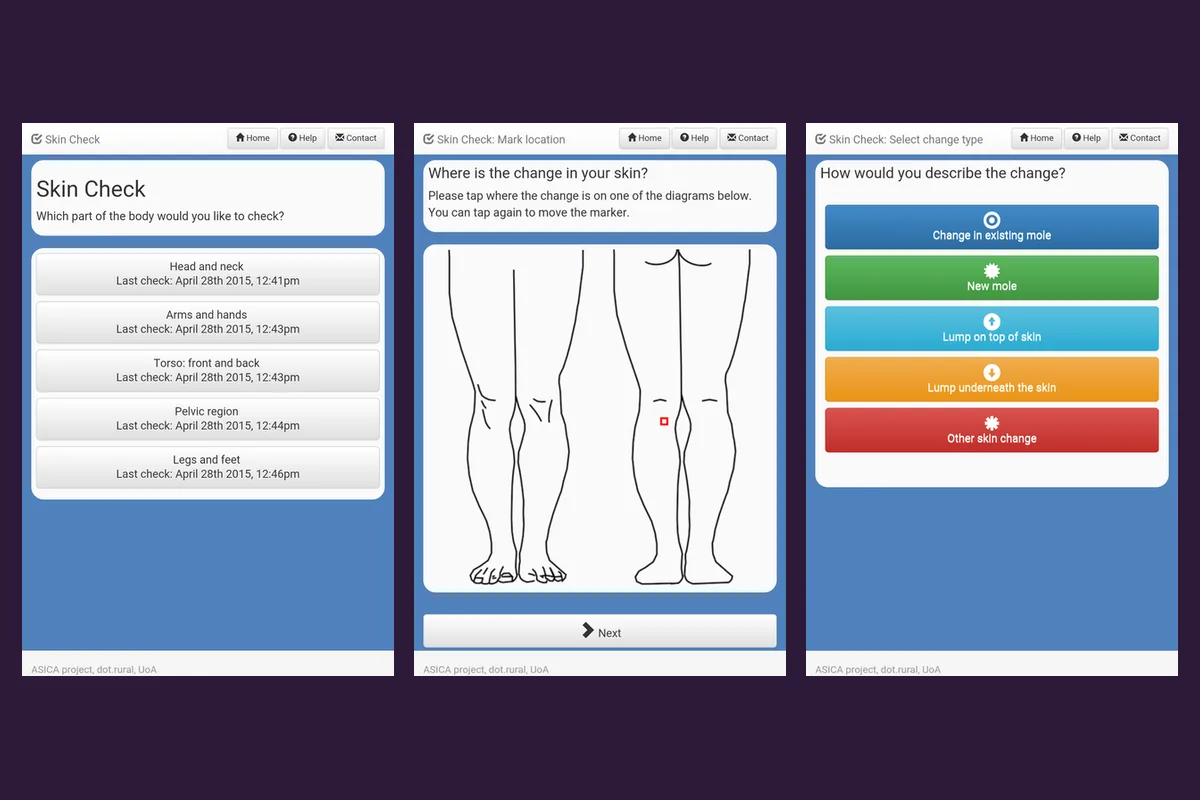
21 people interviewed before anything was built
Data and research
ASICA
A research app that helps people treated for melanoma check their own skin at home, one body area at a time.
Questions people ask
How long does a web app take to build?
It depends on the size of the job. We agree the scope and priorities together, and I check and test the work before handing it over. Tell me what you need and I will give you a date before I start.
Can it work with the systems we already have?
Usually. I connect new systems to existing ones, bring in old data, and set up sign-in with the accounts your people already use.
Who owns the system?
You do. I use standard, widely used tools. If you ever move on, you take everything with you.
For IT people
15 years of JavaScript, 10 of PHP, 10 of Apache and 3 of JSP. I support the frameworks I use, and Java and C as well. Databases: MariaDB, MySQL, Postgres and SQLite. Semantic, accessible HTML throughout.
-
Passkeys and single sign-on
Passkey login and single sign-on: one identity service for every app, with WebAuthn, OIDC and roles that match how the organisation works.